Brand & marketing site
kivathesalesguy.com
A sales and mindset coach with a keynote, a following and no website. We built the brand, the site and the system behind the signup button.
The brief
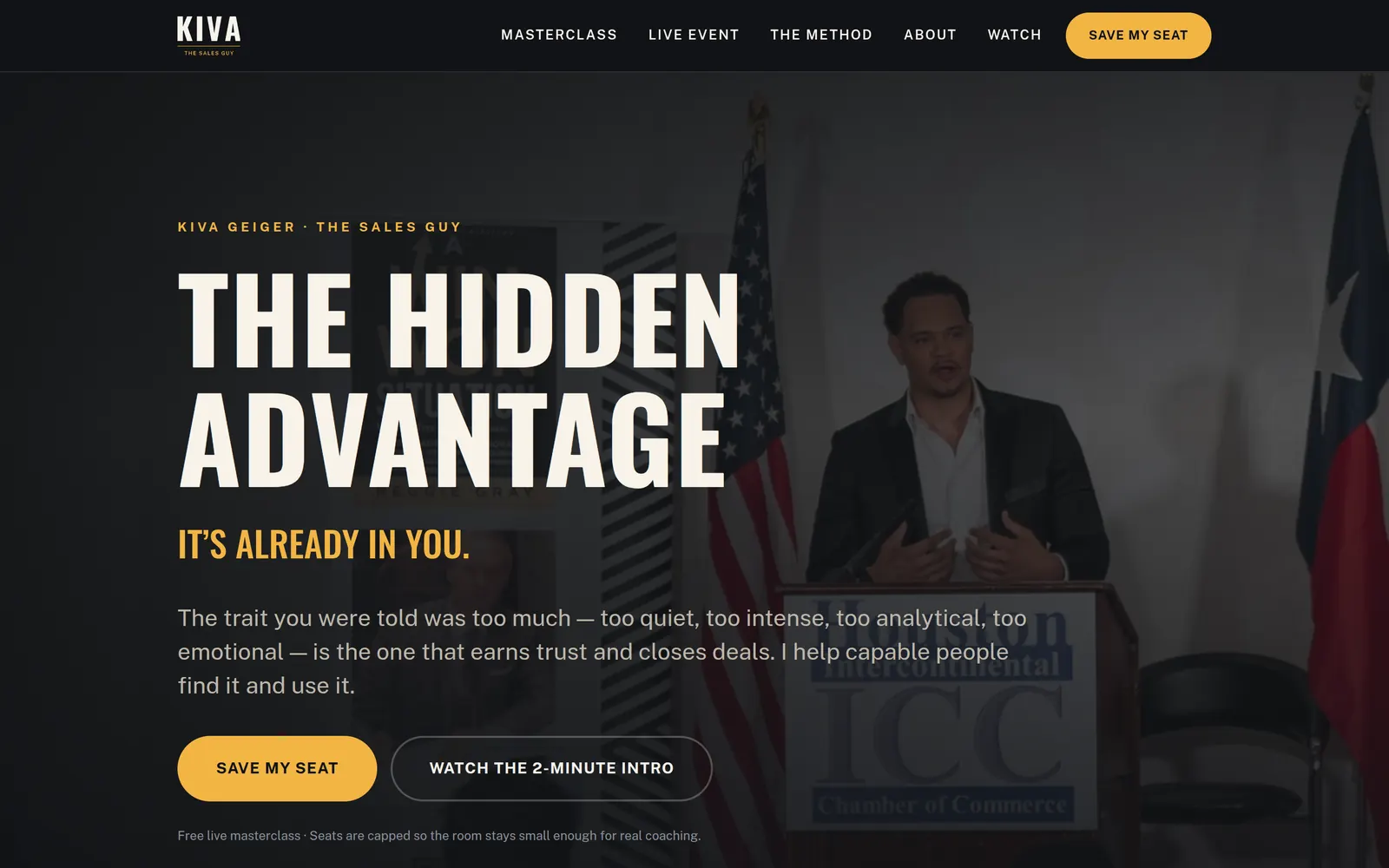
Kiva Geiger coaches sales professionals on trust and mindset. He arrived with a keynote deck, two offer-page designs, a YouTube channel and a domain pointed at nothing — no logo, no site, no way to capture an enquiry. The reference he gave was tonyrobbins.com: the celebrity-coach register, built around a person rather than a product.
Identity
The brief called for a logo built on the letters KIVA, with the K alone as a favicon. We followed the convention that register actually uses — a typographic wordmark, no pictorial mark — set heavy and condensed with wide tracking, a rule, and the descriptor beneath.
The letterforms are drawn from real type and baked to SVG paths, so the logo renders identically whether or not a webfont has loaded. A logo should never wait on a network request. The K sits on a rounded plate for the favicon, with a tighter variant for 16 and 32 pixels, where the roomier drawing loses the letter to its own padding.
The site
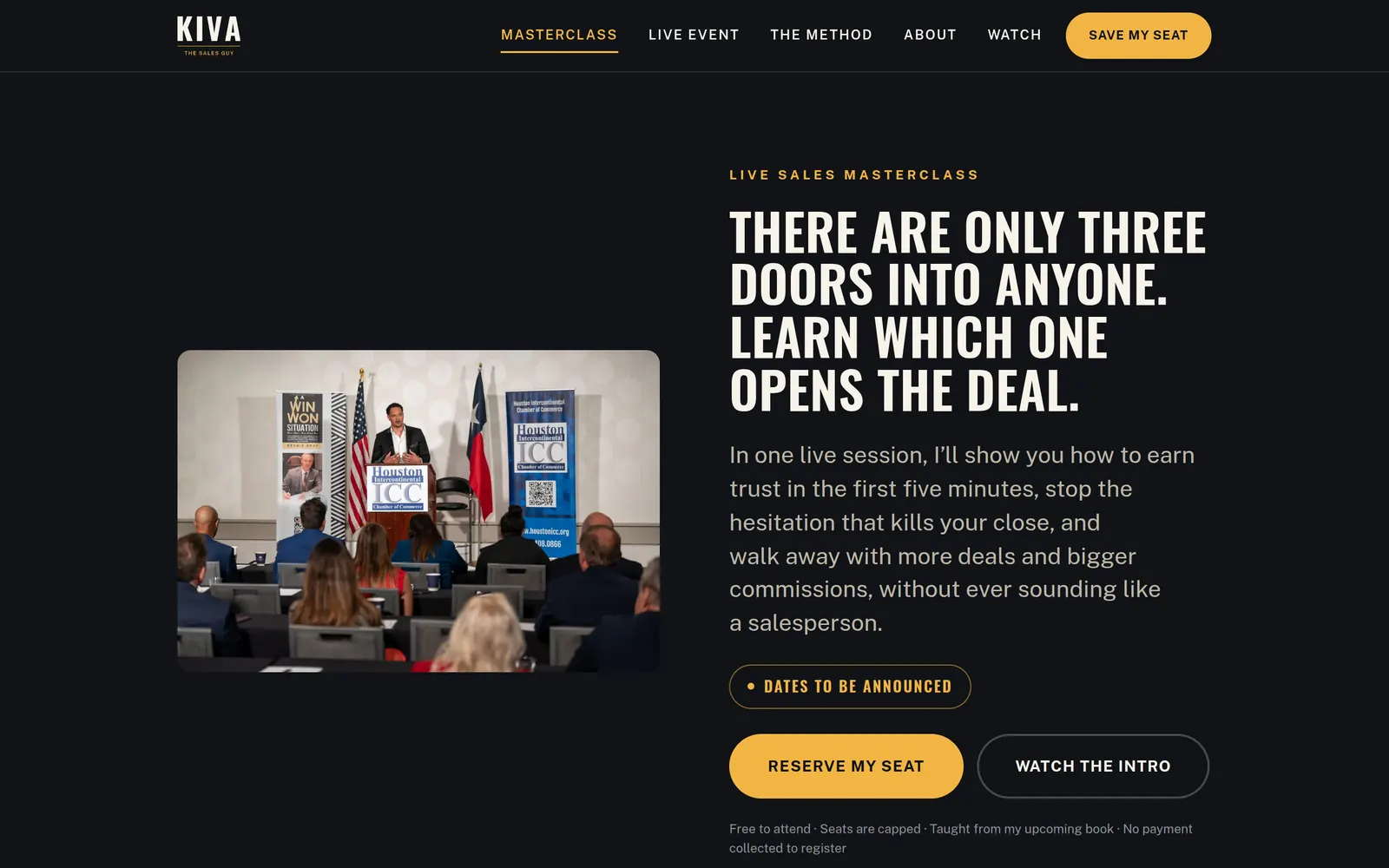
Three pages: a hub, the free masterclass, and the paid one-day event, plus the legal and confirmation pages a working signup flow needs. The palette and typography are taken from Kiva's own keynote rather than from the reference site, so his slides, his collateral and his website read as one brand.
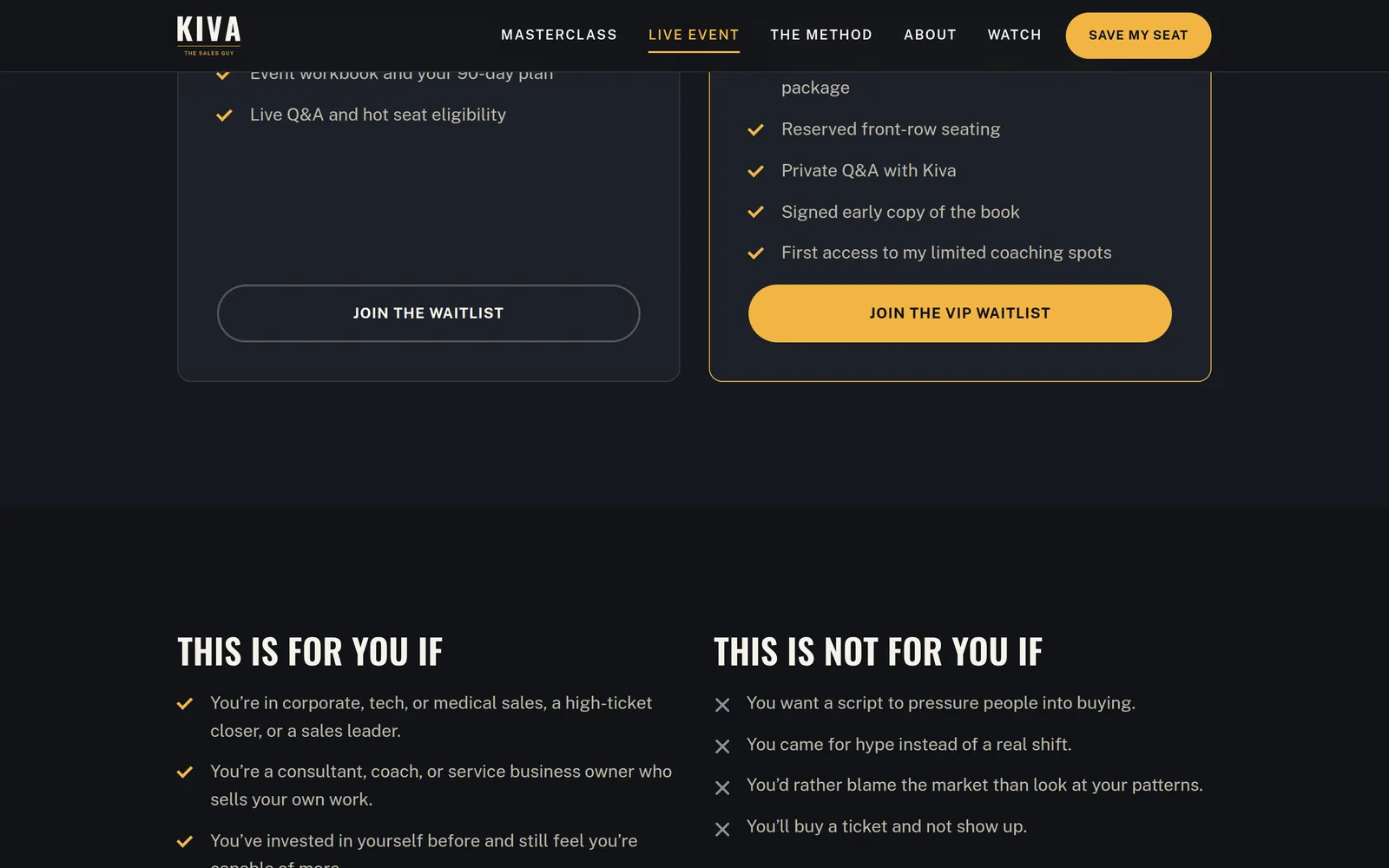
Every date, price and seat count in his source material was an unfilled placeholder. Rather than invent specifics, those sections say the dates are to be announced and collect waitlist signups — which is the honest version and the one that converts while the calendar is still moving.
Under it
- No third parties. Fonts are self-hosted and subset; images are responsive WebP. Nothing is fetched from Google, YouTube or a CDN to render a page, so no outside company learns who visited.
- One endpoint. Signups post to a small Node service that stores them in SQLite and emails him. Storage is the system of record: if mail breaks, the lead is still captured and the visitor still sees success.
- Defence in depth. Rate limiting at the proxy and in the app, a honeypot field, a strict Content-Security-Policy, and its own TLS certificate kept separate from neighbouring sites.
- Works without JavaScript. The forms submit normally and land on a confirmation page; the script only improves the experience.
Something like this?
Tell us what you're building and where it's stuck. Thirty minutes, no deck.
Get in touch